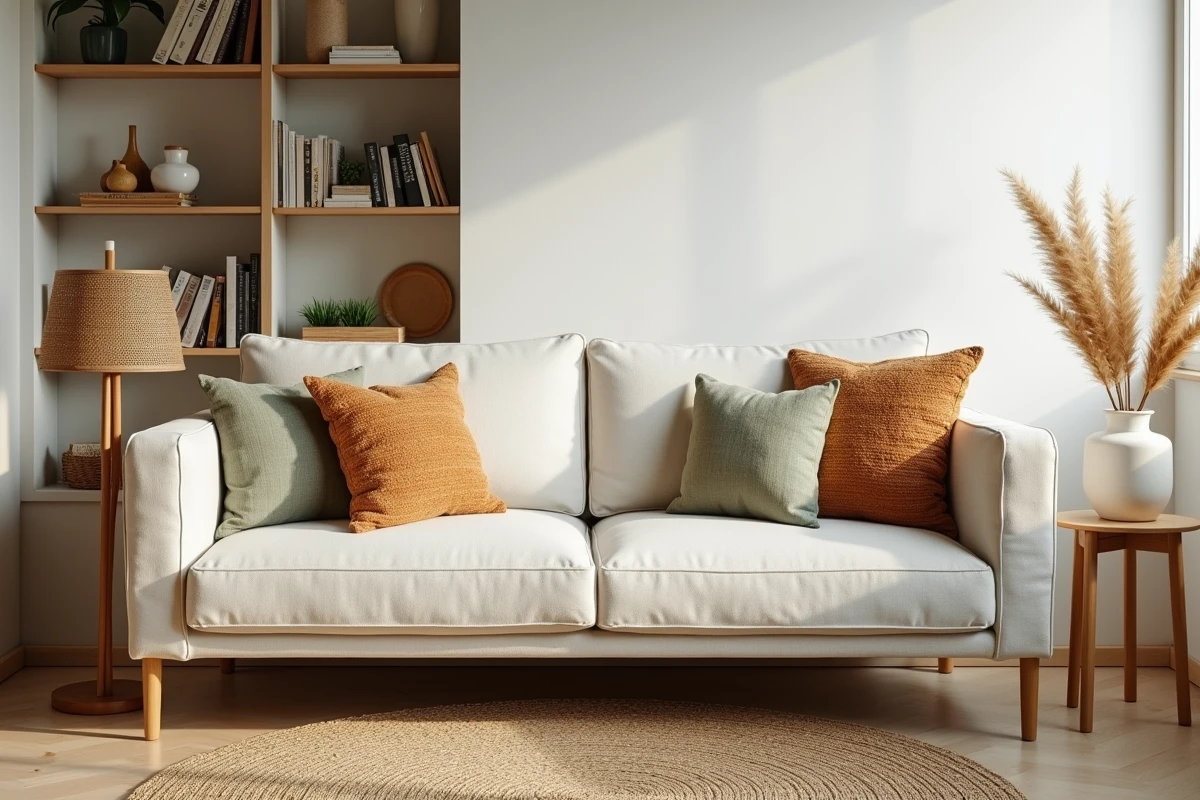
Enhancing an interior without major renovations requires choosing the right levers according to the configuration of each room. A well-placed accent wall can transform a living room in just a few hours, but the same intervention loses its effectiveness in a narrow hallway or a space constrained by circulation. Comparing the actual impact of each intervention, room by room, allows for distinguishing what truly transforms a space from what is merely a passing trend.
Comparative table of decor interventions based on impact and space constraints
Not all modifications offer the same ratio between effort expended and perceived result. The table below ranks the most common interventions based on their visual effect, relative cost, and compatibility with small spaces or those subject to circulation constraints.
| Intervention | Visual Effect | Relative Cost | Compatible with Restricted Space |
|---|---|---|---|
| Accent wall painting | Strong | Low | Yes |
| Vertical wooden slats | Strong | Moderate | Yes (if thin) |
| Stabilized plant wall | Medium to strong | High | Yes (wall-mounted) |
| Repositionable modular furniture | Medium | Moderate | Yes |
| Large wall mirror | Strong | Moderate | Yes |
| Panoramic wallpaper | Strong | Moderate to high | No (recess needed) |
| Frame accumulation (gallery wall) | Medium | Low to moderate | Yes |
Accent wall painting and wall mirrors top the list for constrained interiors: strong visual impact, low floor space. Panoramic wallpaper, often highlighted in magazines, loses its effect in a narrow room where space for viewing is lacking.
To delve deeper into each approach and find decor ideas on Oh Brico, sorting by room type remains the most reliable filter before embarking on a project.
Biomorphic shapes and natural textures: accessible decoration without clutter
Organic shapes and natural textures are gaining ground in residential decor. Mirrors with irregular edges, rounded vases, textiles in raw linen or jute: these elements provide a calming effect without taking up floor space.
This biomorphic trend is particularly suited to small spaces. A free-form mirror mounted on the wall creates an impression of depth while serving as a focal point. Curved cushions placed on an existing seat are enough to change the ambiance of a living room.
Materials to favor for a natural interior
- Raw wood or driftwood, usable as a wall shelf, photo frame, or coat hook, adds warmth without reducing circulation space
- Reconstituted stone in thin wall cladding (a few millimeters thick) gives natural relief to an accent wall without encroaching on the room
- Plant fibers (rattan, wicker, raffia) in hanging or wall-mounted planters utilize verticality rather than floor space
The common point of these choices: verticality replaces horizontal spread. An interior gains character through the walls and ceiling, not just through the furniture placed.
Decor ideas adapted to PMR accessibility standards
PMR standards impose minimum passage widths and turning areas free of obstacles. Decorating an accessible home thus requires a different perspective, where each added object is first measured by the circulation space it leaves free.
Colors and contrasts as orientation tools
In a PMR home, colors also serve as functional markers. An accent wall in a contrasting shade helps identify a door, hallway, or change in level. The color choice is no longer just aesthetic: it contributes to the readability of the space.
Saturated tones on door frames or baseboards enhance this contrast without adding any objects to the floor. Paired with a light wall, they guide the eye and movement.
Modular furniture and wall mounts
The “Living Tomorrow” study published by IFOP in April 2026 highlights a marked preference for DIY modular solutions in temporary rentals, particularly among young urban dwellers on the move. This observation directly applies to accessible housing: a repositionable piece of furniture allows for adapting the layout according to current circulation needs.
- Wall-mounted shelves with adjustable brackets can be set at height without tools, allowing access to items from a wheelchair
- Wall-mounted consoles free up floor space and facilitate the passage of a wheelchair or walker
- Track lighting or adjustable wall sconces replace floor lamps, eliminating a common obstacle in narrow hallways
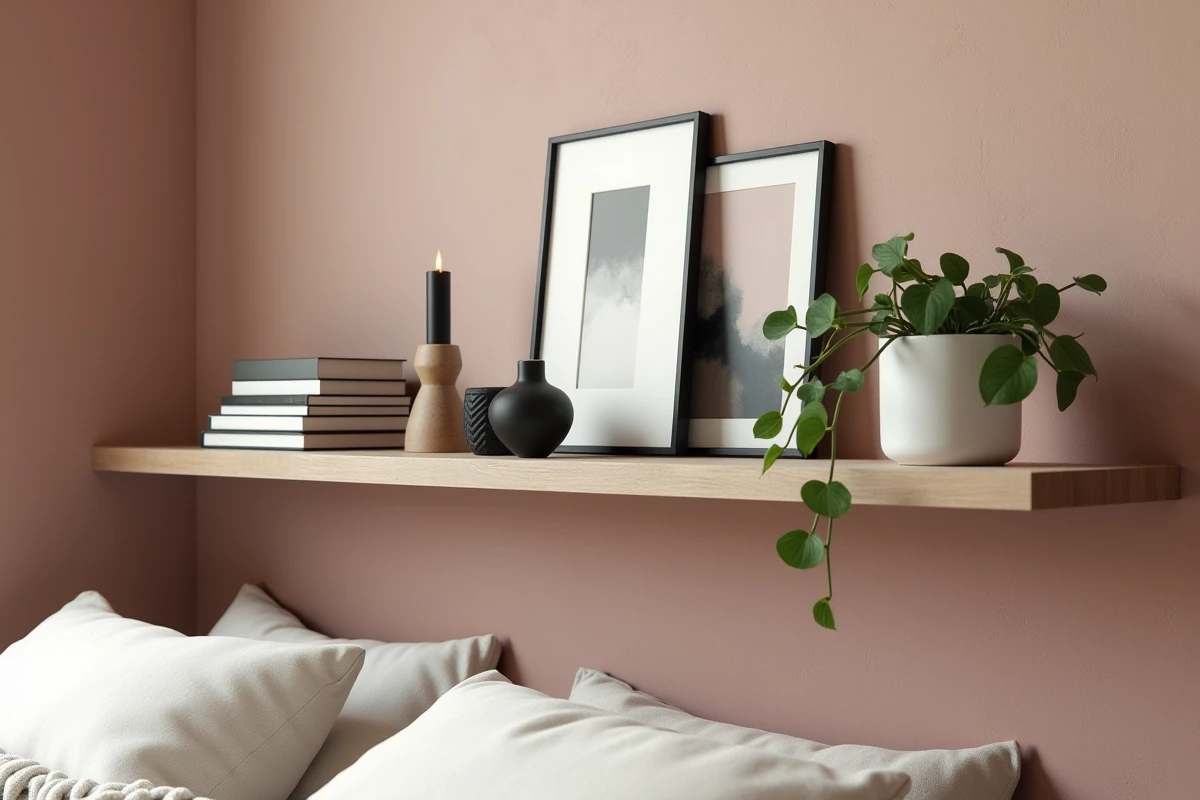
Each decorative element added to a PMR space must pass a simple test: does it reduce the free maneuvering area? If the answer is yes, it should be wall-mounted or it doesn’t belong.
Accent wall in the living room: choosing the right technique according to the configuration
The living room remains the space where the visual impact of an accent wall is most easily measured. Two approaches dominate: painting and wooden slats.
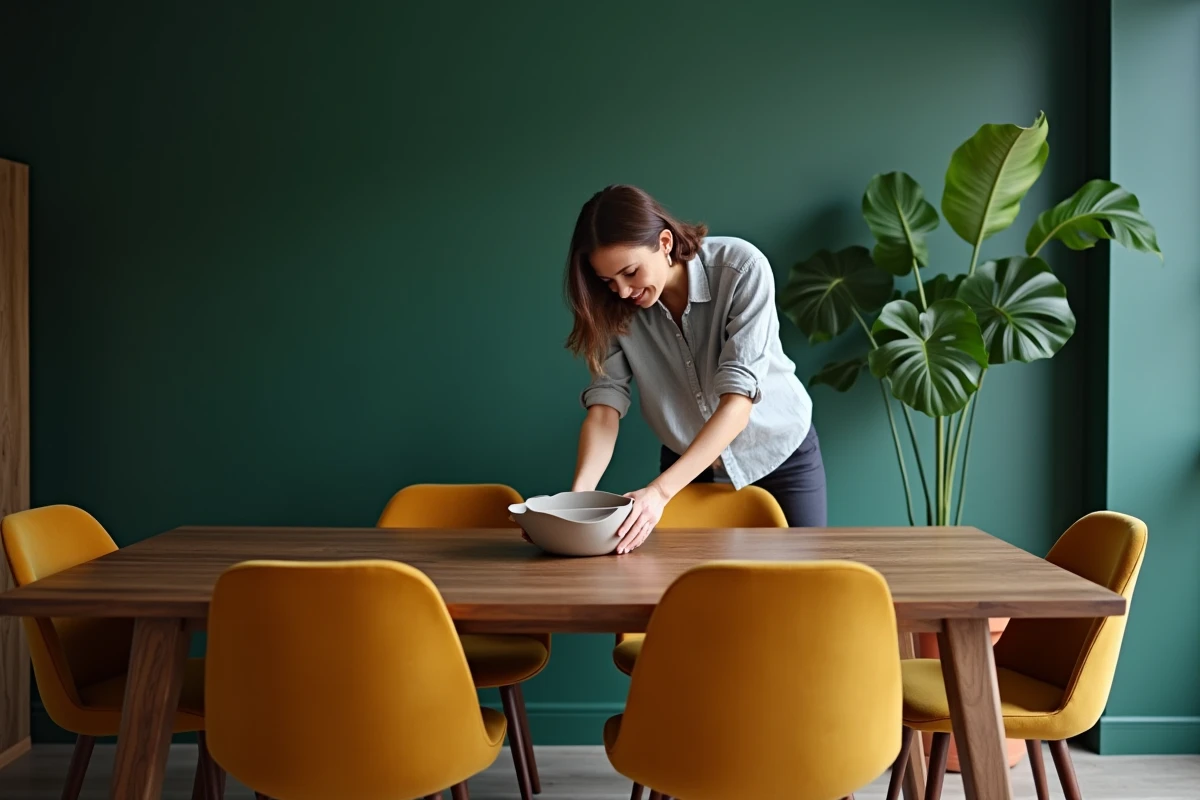
Painting offers a quick result. A dark shade (forest green, midnight blue, deep terracotta) on a single wall is enough to visually restructure the room. The chosen wall is the one that the eye meets first upon entering.
Vertical wooden slats add relief and texture. Their thickness varies, and this is where the room’s configuration matters. In a shallow living room, slats less than two centimeters thick create the desired vertical line effect without visually shrinking the space. Conversely, thick slats in a narrow room create a feeling of confinement.
The accent wall works when it remains unique. Two walls treated at the same time neutralize each other and blur the reading of the room.
An interior transforms through targeted choices, not through an accumulation of trends. The wall that receives the color or relief, the light fixture that replaces the floor lamp, the mirror that opens the perspective: these decisions, made based on the actual configuration of the room, stand the test of time.