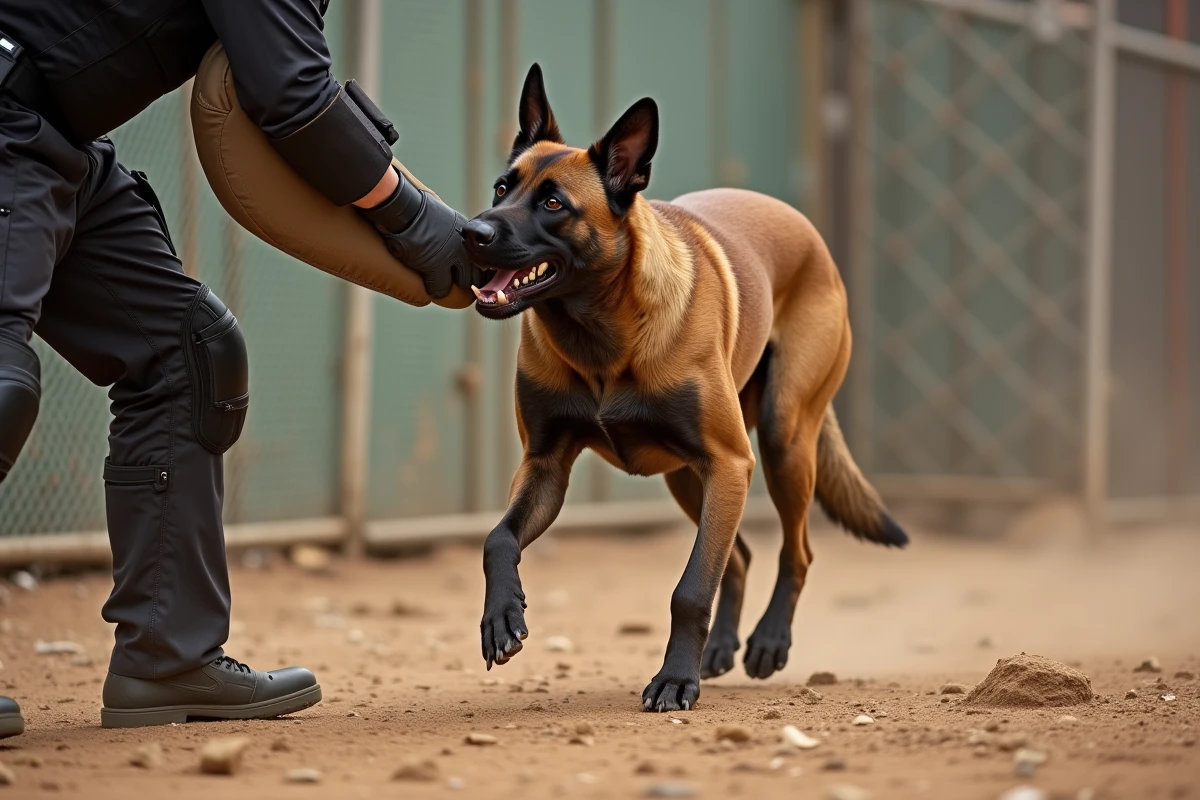
The bite force of the Malinois is measured in PSI (pounds per square inch), but the values circulating online vary widely depending on the protocols used. No static laboratory measurement reflects the actual pressure exerted by a dog in a defense situation or in sport biting. We consistently observe a gap between theoretical figures and the mechanical behavior of the jaw under dynamic conditions.
Sport biting and the bite force of the Malinois in real situations
Laboratory bite tests place the dog in an artificial context: open jaw, pressure applied to a fixed sensor, without lateral movement or shaking. In sport biting (ring, campaign, mondioring), the Malinois mobilizes a different muscle sequence. The masseter and temporal muscles work in synergy with the cervical muscles to produce a rotary pull, not just a simple vertical compression.
This distinction changes the interpretation of the figures. A Malinois trained in sport biting develops a more effective dynamic grip than a powerful static bite. The depth of grip, the speed of engagement, and the ability to maintain pressure under stress matter more than the peak force measured on a piezoelectric sensor.
The K9 units of the National Police have documented a significant decrease in bite force under real fatigue conditions during prolonged interventions, according to the Journal of Applied Criminology (vol. 102, March 2026). A Malinois that intervenes after running several hundred meters does not bite with the same intensity as a resting dog in a laboratory.
Training in sport biting conditions the grip technique much more than the raw bite force of the Malinois measured statically.
Selection lines and power gap between Belgian and American Malinois
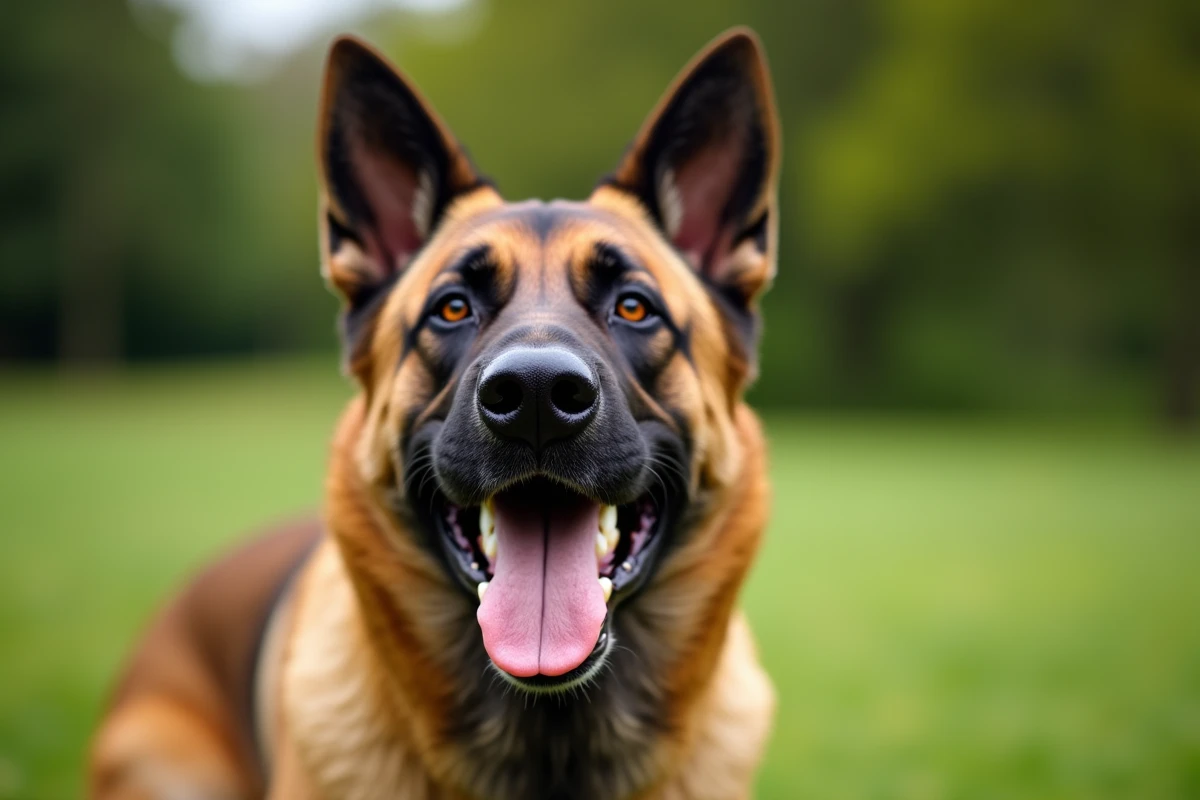
Not all Malinois bite the same way. A comparative study published in the Journal of Veterinary Behavior (April 2026) shows that the Belgian Malinois has a bite force that is 15 to 20% lower than that of the American Malinois in standardized tests. The explanation lies in the selection lines.
American breeders have favored heavier subjects with greater cranial muscle mass. Belgian lines, oriented towards sport and police work, select for reactivity, speed of engagement, and endurance rather than raw power.
This divergence has practical consequences for owners and professionals:
- A Malinois from the KNPV line (Netherlands/Belgium) develops a quick and adjustable grip, suitable for control biting in intervention
- An American line Malinois (AKC or working) produces a stronger compression but with a sometimes slower engagement time
- Subjects resulting from crosses between lines show individual variability that makes any generalization about the breed unreliable
We recommend never evaluating a Malinois solely based on a PSI figure associated with the breed. The line, individual size, and type of training received determine the actual biting mechanics.
Working dog certification and regulatory framework for biting
Since January 2026, decree n°2025-1478 mandates a “working dog” certification for any Malinois used in private security in France. This text aims to standardize bite tests in operational contexts, moving beyond mere force measurement to include behavioral criteria.
The certification evaluates three dimensions:
- The dog’s ability to modulate its grip (bite and release on command within a defined time)
- Maintaining the bite under auditory and visual stress (simulating an urban environment)
- The absence of aggressive redirection towards the handler or third parties after the biting phase
This regulatory framework marks a shift in approach. Jaw power alone no longer qualifies a dog for work. A Malinois that bites hard but does not release on command, or that redirects its bite, fails the certification. Behavior takes precedence over biomechanics.
Malinois biting and canine behavior: what power does not reveal
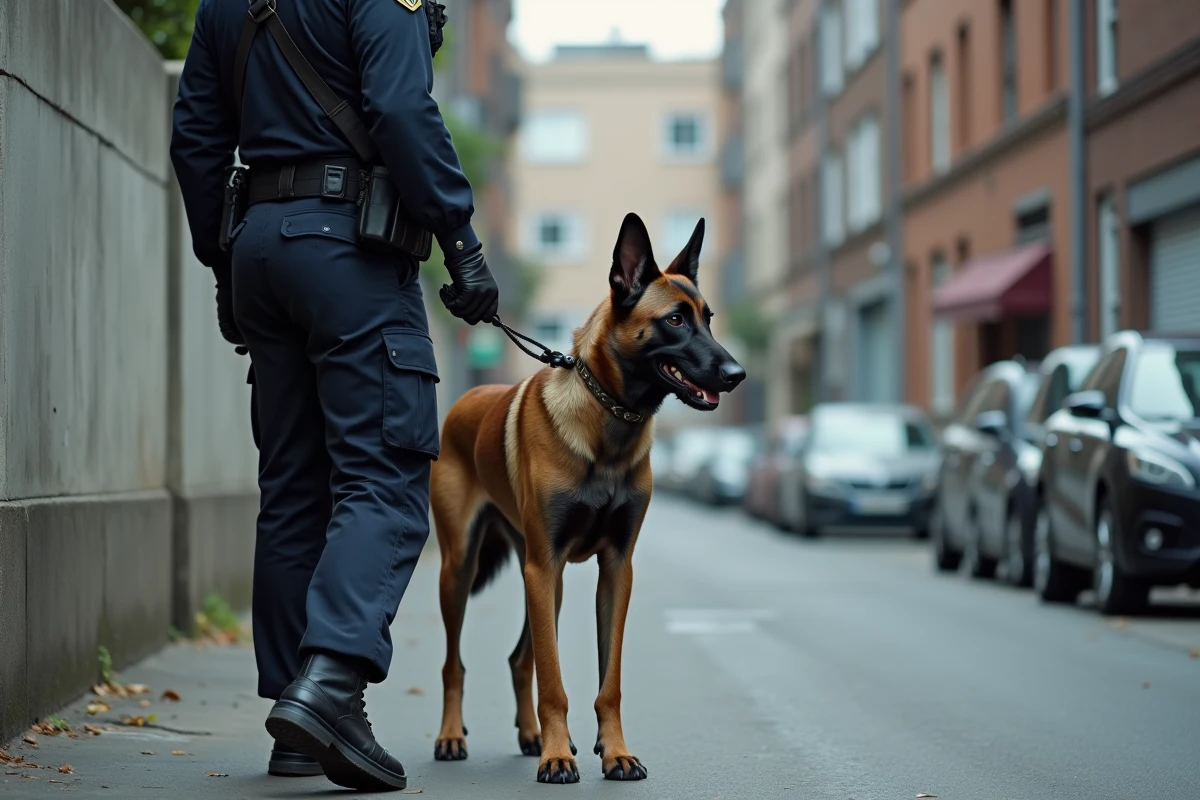
The fixation on bite force figures obscures a parameter that veterinary behaviorists consider crucial: the bite trigger threshold. A well-socialized Malinois, even with a powerful jaw, has a high bite threshold. It takes a situation of stress, pain, or intense perceived threat to trigger a defensive bite.
The Belgian Malinois is not classified among the so-called “category” breeds under French law. Its biting behavior depends on the quality of its socialization between the third and twelfth weeks of life, and then on the consistency of the education received from the owner. A Malinois puppy deprived of social stimulation during this critical window develops heightened reactivity that can lead to fear bites, regardless of the power of its jaw.
Data from the 2025 bite report confirm that the majority of incidents involving dogs are not correlated with the breed’s bite force, but with management failures by the owner. A Malinois trained in controlled biting bites less often than a non-socialized dog, across all breeds.
The pertinent question for a Malinois owner is not “what is the strength of its jaw” but “does my dog know how to inhibit its bite.” Bite inhibition is learned among puppies, reinforced through structured play with the owner, and maintained through a stable living environment. The mechanical power of the Belgian Malinois’s jaw remains an anatomical fact, not an indicator of danger.