
In France, public aid for press pluralism is primarily aimed at publications recognised as covering political and general news (IPG), under strict legal and editorial criteria. A cultural or ideas magazine can therefore contribute to intellectual diversity without qualifying for these schemes. This gap between institutional recognition and a publication’s actual contribution to public debate puts independent magazines in a unique position: economically vulnerable, yet editorially free.
Financial structure and editorial independence of cultural magazines
A magazine’s independence cannot simply be declared in an editorial. It is built into the publication’s legal and financial structure. Mediapart illustrates this principle: independence rests on subscriptions, the absence of advertising and a protected ownership structure that prevents any outside takeover.
For a cultural magazine, replicating this model presents specific challenges. The readership of an ideas magazine is naturally smaller than that of a general-interest news publication. The number of subscriptions needed to cover production, printing and distribution costs rarely reaches a viable level without additional revenue.
Several independent French magazines are exploring hybrid formats, combining quarterly or biannual print editions with a targeted digital presence. A publication such as the one available at https://www.bigre-magazine.fr embodies this approach, with print remaining the primary medium for a distinctive editorial vision.
Capital is also a question of editorial time. A magazine funded by its readers can afford long research and writing cycles, whereas reliance on advertising imposes schedules aligned with advertisers’ needs.

Public press subsidies: a framework that often excludes magazines of ideas
French press support schemes include subsidies for distribution, home delivery and digital development. These mechanisms aim to ensure the economic sustainability of press services, but their eligibility criteria do not always cover cultural magazines.
Pluralism subsidies primarily target publications classified as IPG, which requires an editorial focus on political and general news. A magazine devoted to literary criticism, philosophy or visual arts does not meet these criteria, even if it directly contributes to the diversity of public debate.
This institutional filter creates a tangible imbalance:
- A national daily newspaper benefits from preferential postal rates and direct home-delivery subsidies, reducing the cost of getting copies to subscribers
- An independent cultural magazine bears the full cost of distribution, which accounts for a significant share of the cost of producing each copy
- Online press subsidies support digital editorial development, but once again require recognition as a press service under the relevant regulations
The result is paradoxical. The publications that do the most to offer fresh perspectives on culture are often the least able to access the public support mechanisms intended to safeguard pluralism.
Print distribution and visibility beyond digital platforms
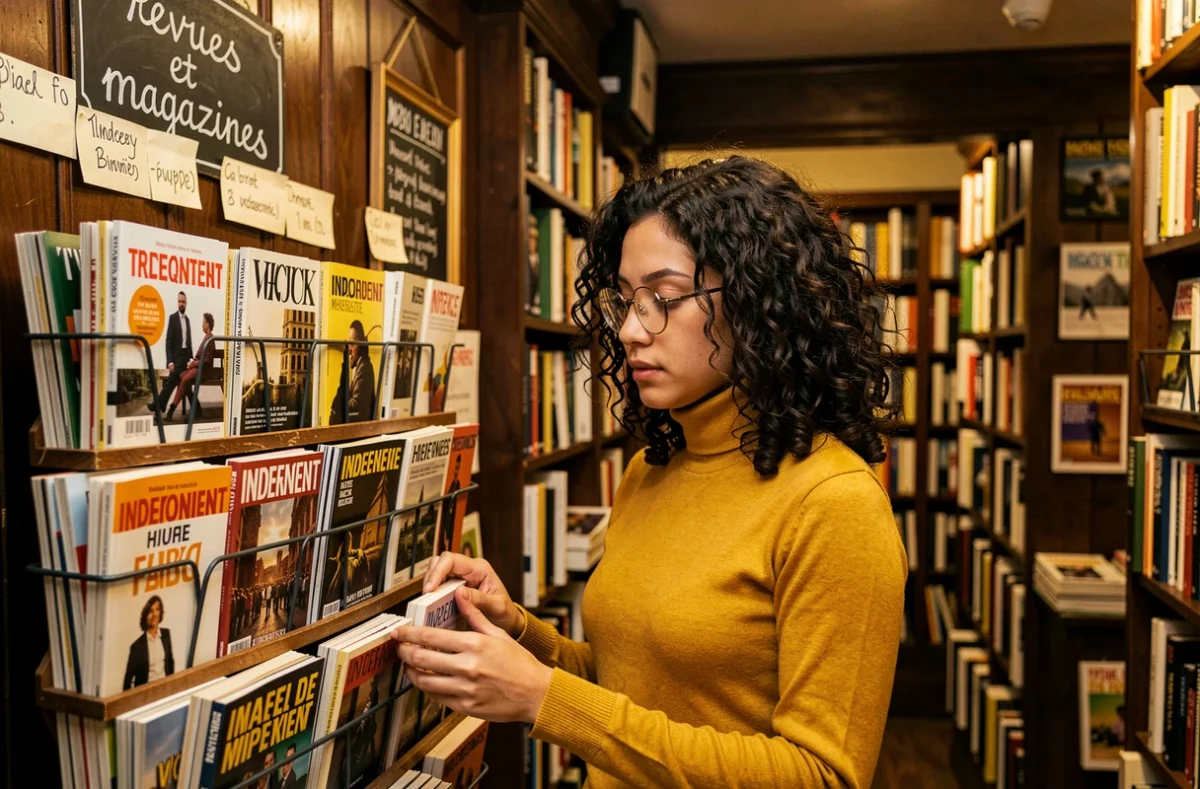
Physical distribution is both an editorial asset and a logistical challenge. For an independent magazine, being available in bookshops or newsstands means existing beyond the algorithms that govern online visibility.
France’s distribution network has shrunk considerably in recent years. The closure of retail outlets and the consolidation of press distributors make it harder to reach casual readers—the people who discover a publication while browsing an issue.
Independent bookshops as distribution partners
Several cultural magazines bypass the traditional distribution network by working with independent bookshops. This choice creates a natural fit between the content and the place of sale: readers who walk into a specialist bookshop are already looking for a different kind of editorial offering.
This strategy has its limits. Geographical coverage remains uneven, concentrated in major cities and a handful of medium-sized towns with committed booksellers. Rural and suburban areas remain largely out of reach, except through postal subscriptions, whose cost adds to the final price.
Digital and reader relationships: neither a miracle solution nor a dead end
Setting traditional print against innovative digital media oversimplifies a more complex problem. French online press support schemes themselves recognise that digital alone cannot guarantee the viability of publications. Online editorial development raises its own questions about revenue, reader retention and control over the relationship with readers.
A cultural magazine that publishes all its content online for free can reach a larger potential audience, but loses the option of generating revenue through paid subscriptions. Conversely, a strict paywall on a little-known publication limits discovery.
Platform dependence and loss of editorial control
Distributing content through social media or aggregators exposes independent magazines to a structural risk. Recommendation algorithms favour short formats, catchy headlines and frequent publishing—all three at odds with the pace of a quarterly journal offering in-depth coverage.
Publishing on these platforms without becoming dependent on them means using them as a shop window without shifting the heart of the editorial relationship there. Newsletters, a dedicated website with a subscriber area or an accompanying podcast offer alternatives that allow a magazine to retain control of its data and tone.
A distinctive editorial voice: what sets an independent magazine apart from a blog
The proliferation of online cultural content on blogs, YouTube channels and specialist accounts has brought the question of what a structured magazine uniquely offers into sharper focus. The difference lies in collaborative editorial work: an editorial board, art direction, layout choices and decisions about which texts to include.
A blog reflects an individual voice. An independent magazine brings several voices into dialogue within a coherent editorial framework. This work of curation and composition creates an intellectual object distinct from the sum of its articles.
- The choice of topics reflects a view of what deserves attention, whereas algorithms prioritise what generates clicks
- Bringing texts, images and long-form formats together creates reading experiences that are impossible in a news feed
- A sustained commitment—issue after issue, season after season—builds a relationship of trust that goes beyond the exchange of information
Independent magazines that offer fresh perspectives on culture do so less through their topics, which they often share with other media, than through how they bring them together and present them to a readership they know. This direct relationship between an editorial team and its readers remains their hardest asset to replicate—and their most fragile to maintain.