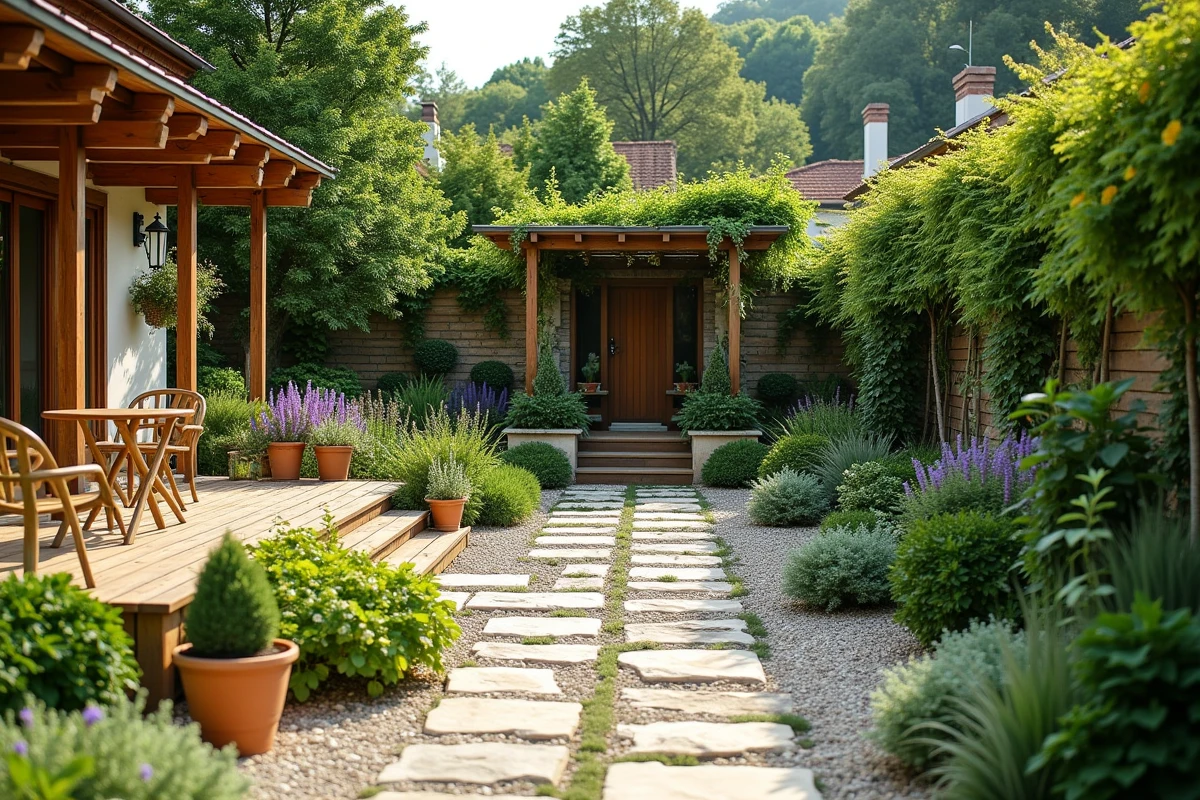
Designing a garden as a haven of peace involves going beyond the simple accumulation of furniture and plants. Each area must serve a specific purpose, with materials suited to the soil, exposure, and local microclimate. Here are ten concrete arrangements that transform an ordinary outdoor space into a place for rejuvenation.
1. Green Pergola to Create a Cool Oasis
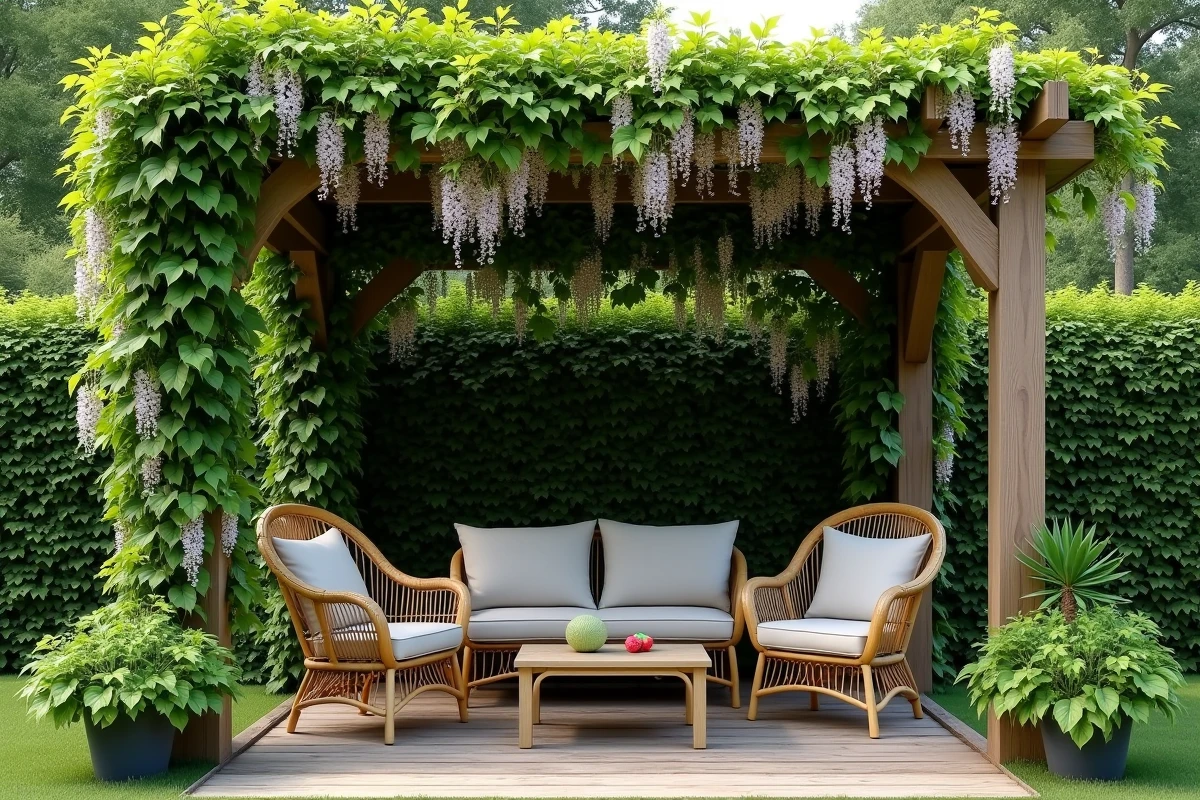
A green pergola with wisteria, Virginia creeper, or star jasmine significantly reduces the perceived temperature under the structure. According to a report by ADEME on outdoor arrangements and summer comfort, a dense plant shade area truly improves thermal comfort during heatwaves.
We recommend class 4 wooden posts (pressure-treated pine or oak) with a minimum cross-section of 12 x 12 cm to support the weight of mature climbing plants. Plan for stainless steel cables stretched between the beams to guide the vegetation without piercing the wood.
To deepen your outdoor projects, you can learn more about Ta Maison Ton Jardin before sizing your structure.
2. Naturalistic Pond with Filtering Plants
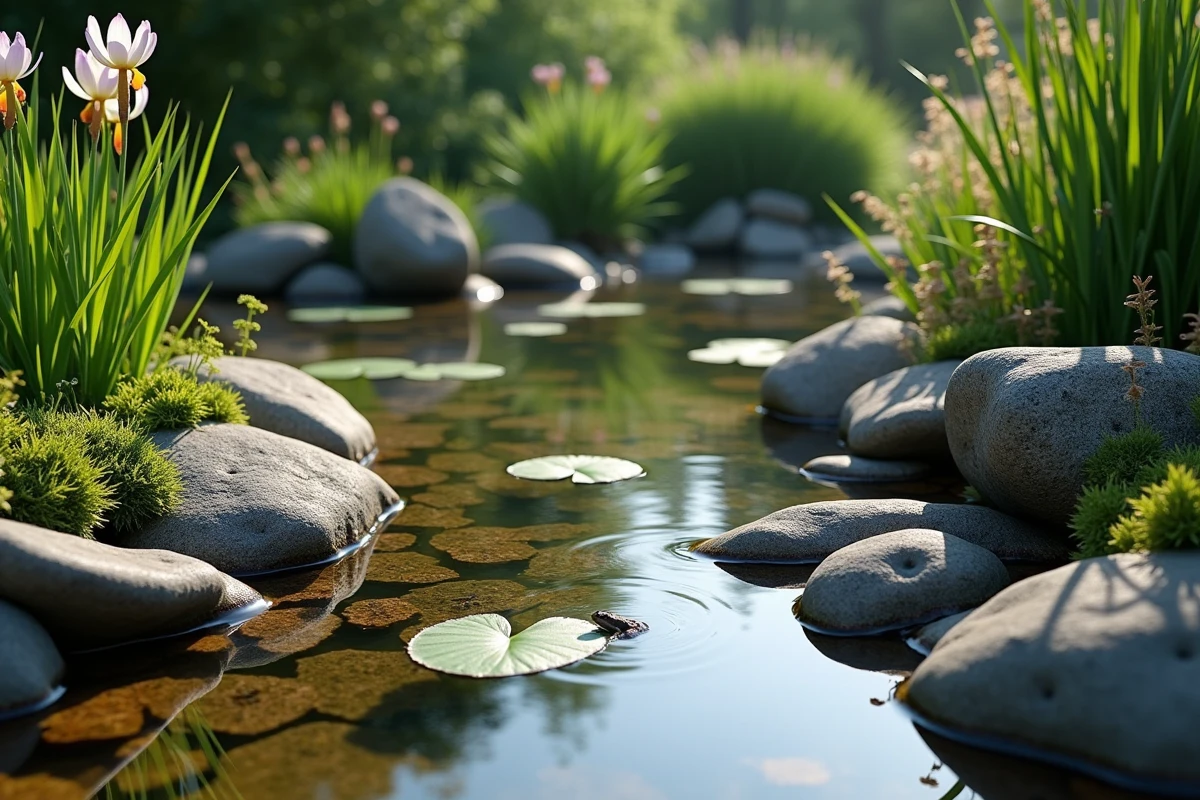
A shallow water feature, between 40 and 60 cm, creates a soothing sound ambiance and attracts beneficial wildlife. Biological filtration relies on purifying plants (marsh iris, water mint, horsetail) installed in a lagoon area separated from the main pond by an immersed wall.
This type of arrangement also aligns with the recommendations of the LPO Refuge guide (updated September 2023), which advocates for shallow water points to promote biodiversity near human resting areas. Gently sloping banks allow birds and hedgehogs to access the water without the risk of drowning.
3. Mixed Country Hedge for Acoustic Privacy
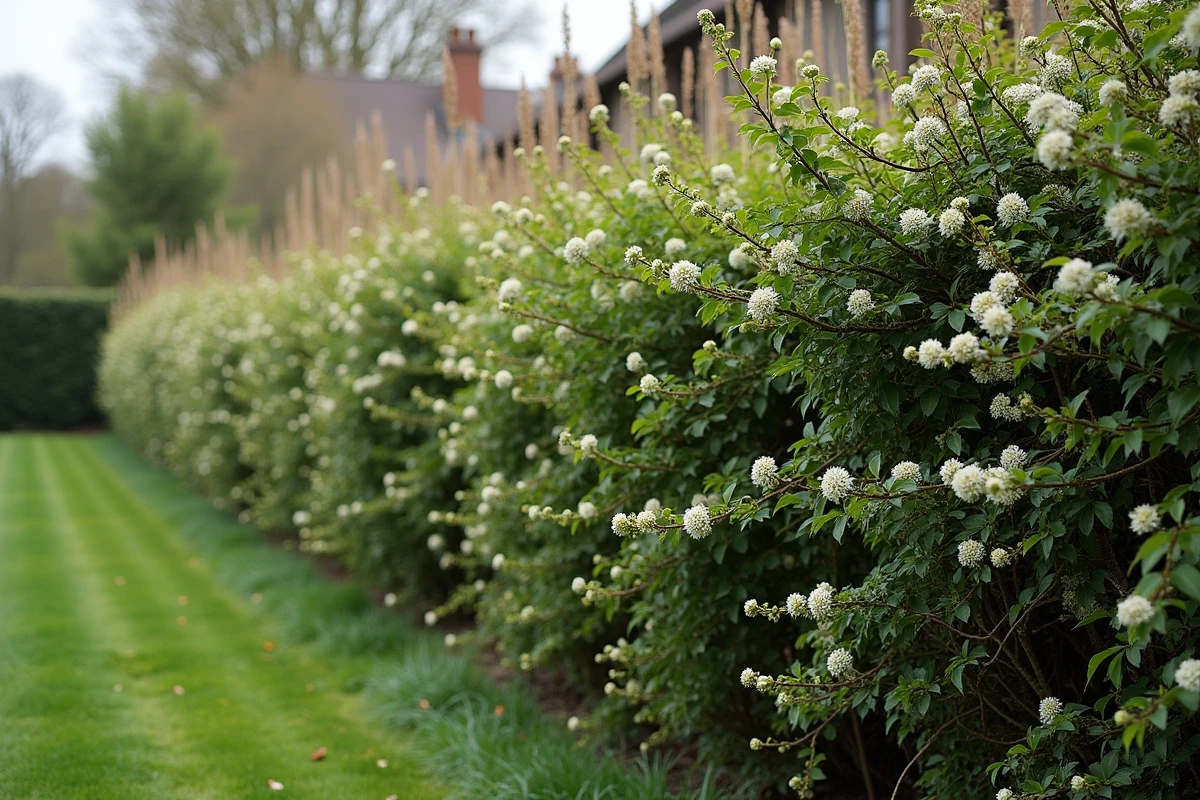
A monospecific hedge of thuja does not filter noise or wind optimally. A mixed country hedge (hornbeam, hazel, viburnum, bloodtwig dogwood, privet) absorbs more sound frequencies due to the diversity of leaf densities.
The LPO recommends this type of hedge to create a sound haven, as it also provides nesting sites and berries for birds. Plant in staggered double rows, spaced 80 cm apart, to achieve sufficient thickness in three to four growing seasons.
4. Elevated Wooden Deck with Natural Ventilation
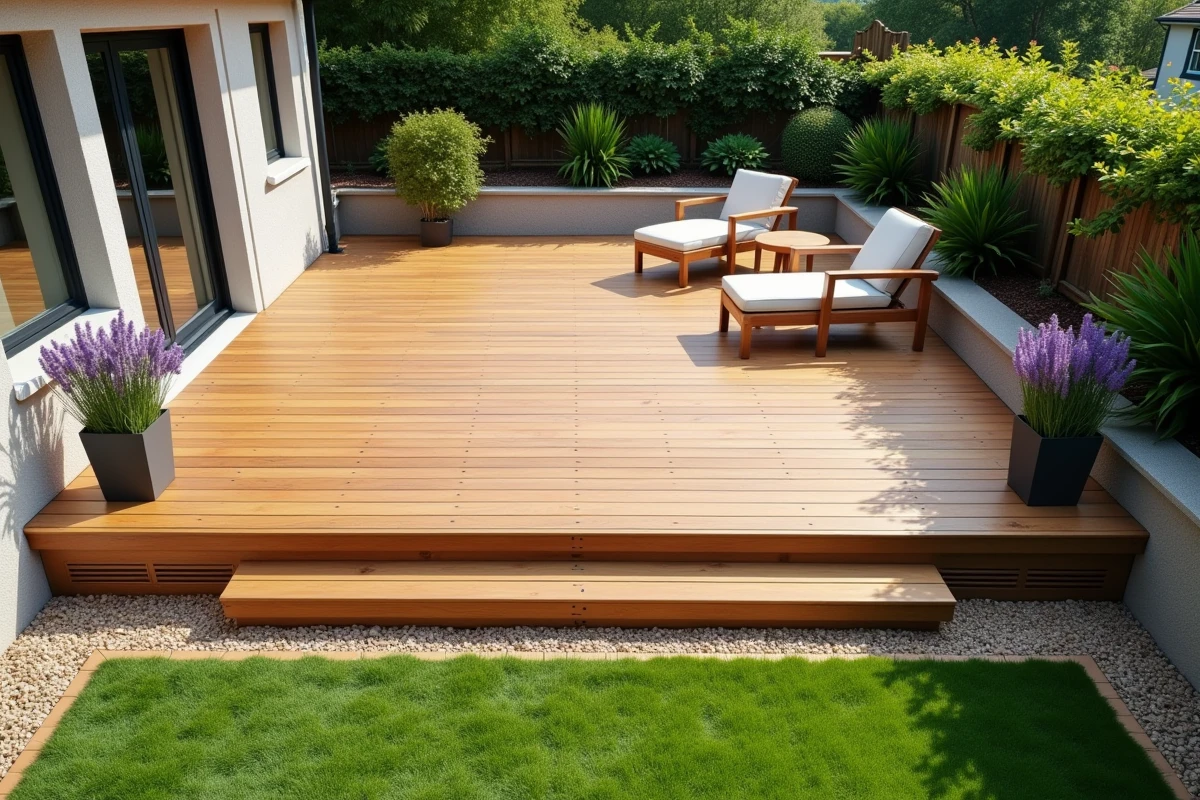
Installing a deck directly on a concrete slab creates a radiator effect in summer. An elevated deck on ventilated joists (minimum 5 cm air gap) limits heat accumulation and protects the wood from stagnant moisture.
Suitable species in full sun include class 4 pine, larch, or exotic woods like cumaru. For reduced maintenance, next-generation composite boards (wood fiber and HDPE resin) resist graying without annual treatment.
5. Low-Maintenance Mediterranean Gravel Garden
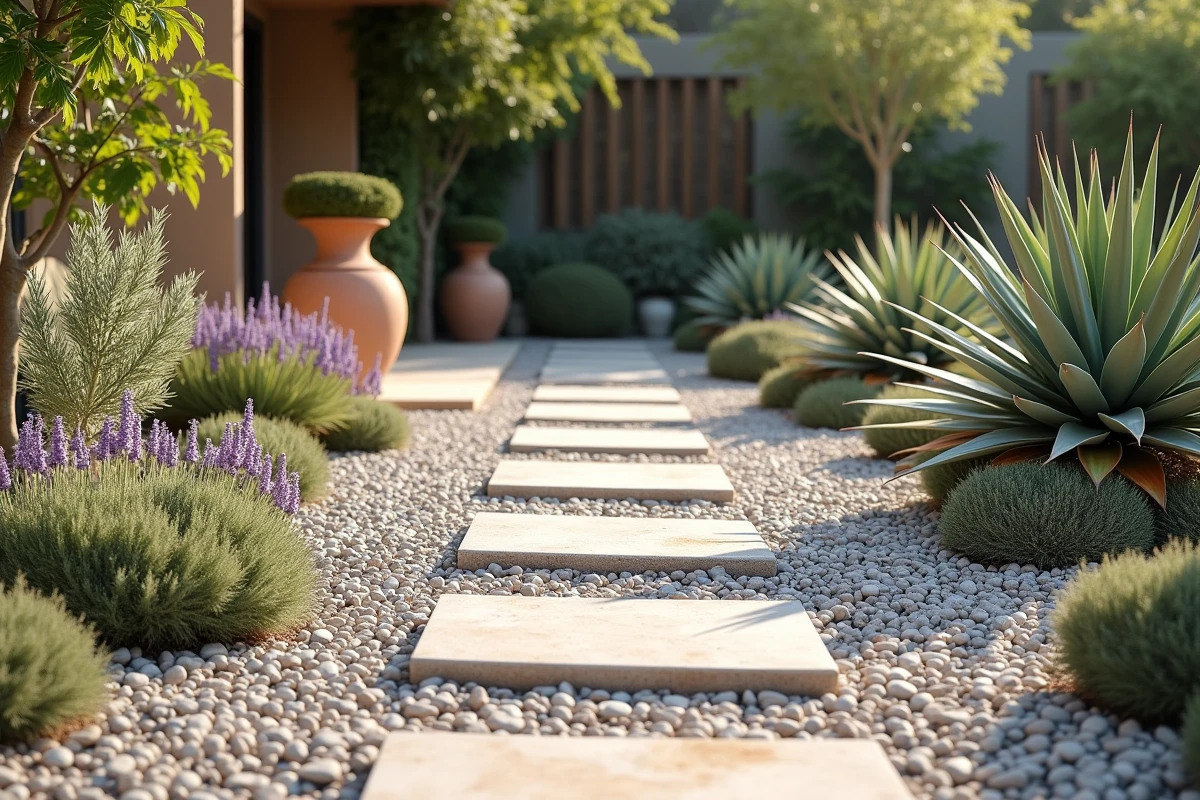
The dry garden is suitable for well-draining soils and full south exposure. We lay a geotextile fabric under the gravel (10-20 mm grade, limestone or pumice) to limit weed growth without resorting to herbicides.
Suitable plants include lavenders, santolines, euphorbias, stipas, and yarrow. This type of landscaping requires almost no watering after the second year of rooting, making it a coherent choice in regions subject to summer water restrictions.
6. Meditation Corner with Integrated Seating
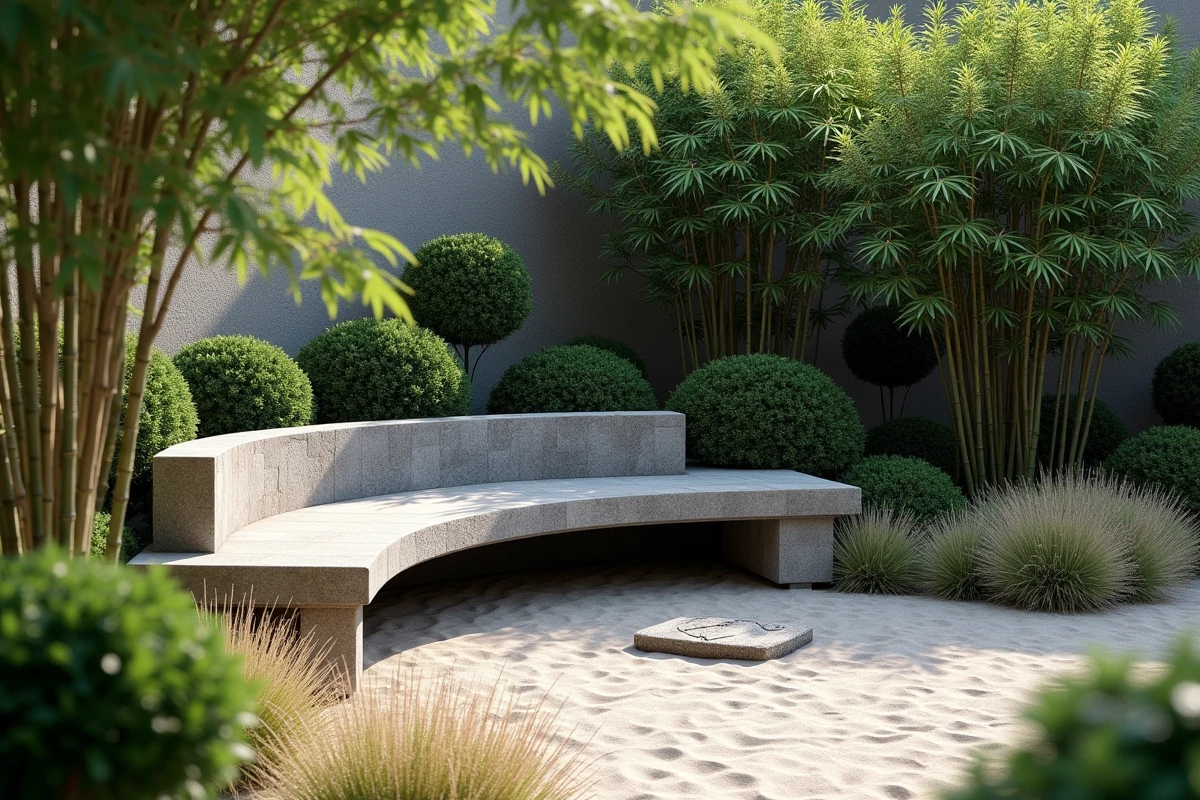
The Observatory of Gardens and Green Spaces (2024 report) notes that an increasing number of individuals are integrating micro-spaces for meditation rather than limiting themselves to traditional garden lounges. A bench made of reconstituted stone or solid wood, oriented with its back to the prevailing wind, is sufficient.
Surround the seating with tall grasses (miscanthus, pennisetum) to create a visual cocoon without closing off the space. The ground can be treated with stepping stones (slate or sandstone slabs laid on a sand bed) to mark the transition with the rest of the garden.
7. Low Voltage Lighting to Extend Evenings
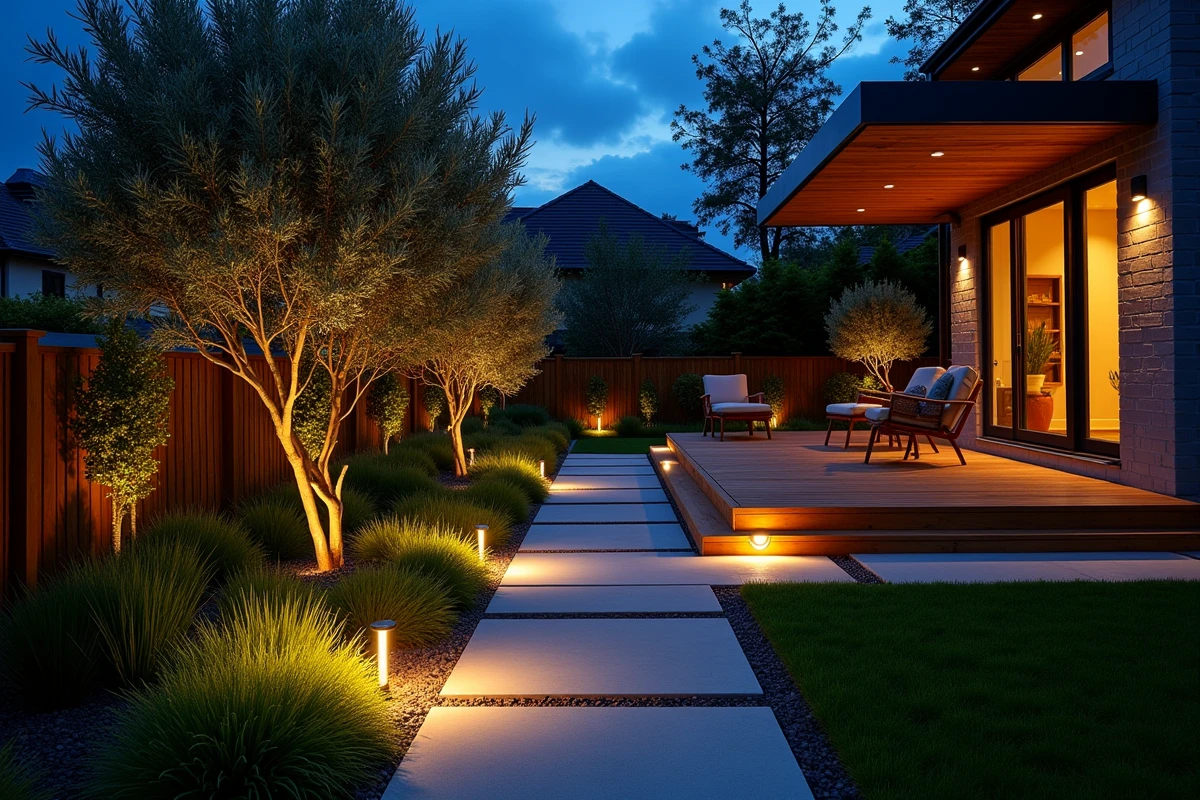
Poorly designed lighting creates light pollution and glare zones. We recommend a 12 V circuit (IP67 transformer) with warm white LED fixtures (2,700 K) spaced every 2 to 3 meters along pathways.
Lighting from below and towards the ground avoids light diffusion into the sky and preserves nocturnal wildlife. For dining areas, a suspended LED garland between two anchor points (pole, tree, facade) creates a friendly atmosphere without over-illuminating.
8. Raised Square Vegetable Garden for Daily Use
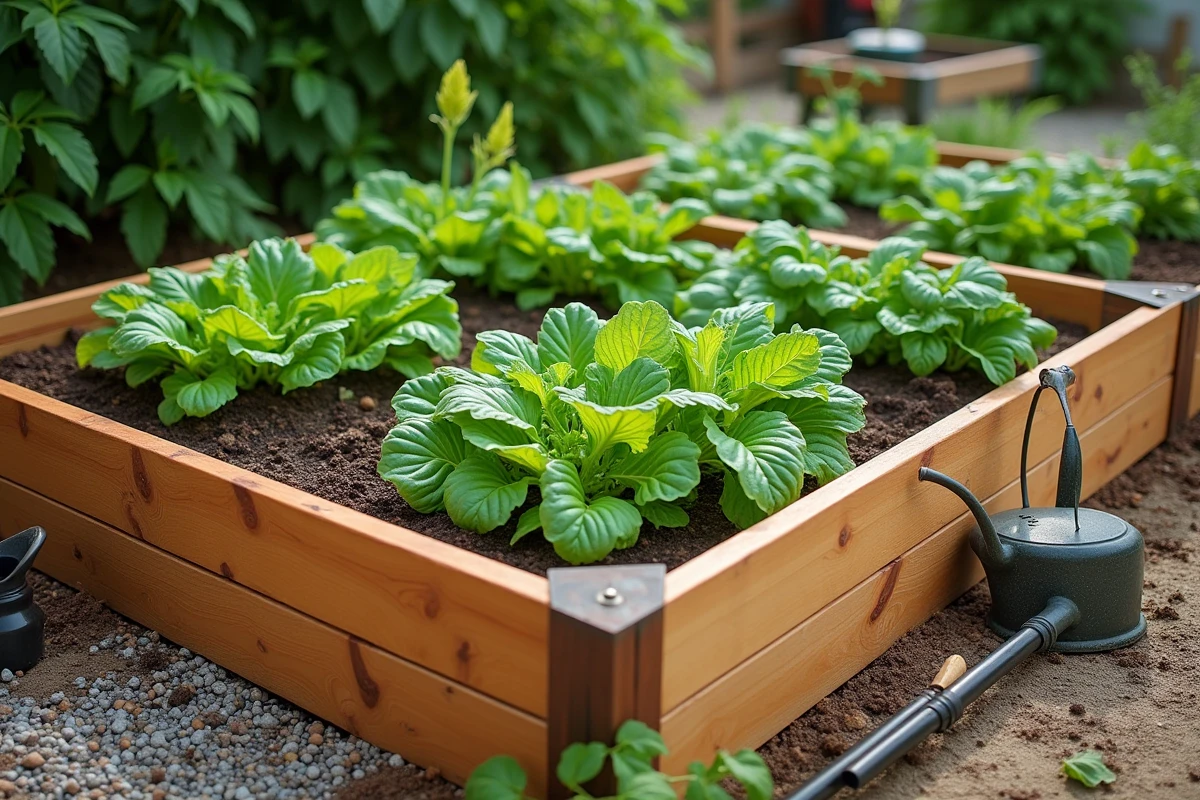
Raised beds (height of 40 to 80 cm) reduce back strain and allow for control over substrate quality. A mix of topsoil, mature compost, and perlite offers suitable drainage for both herbs and leafy vegetables.
Untreated wood frames (Douglas or larch) naturally resist for several years. Plan for a maximum width of 120 cm to access the center without stepping on the substrate. This raised vegetable garden transforms an unused corner into a productive and aesthetic space.
9. Stepping Stone Path to Structure Circulation
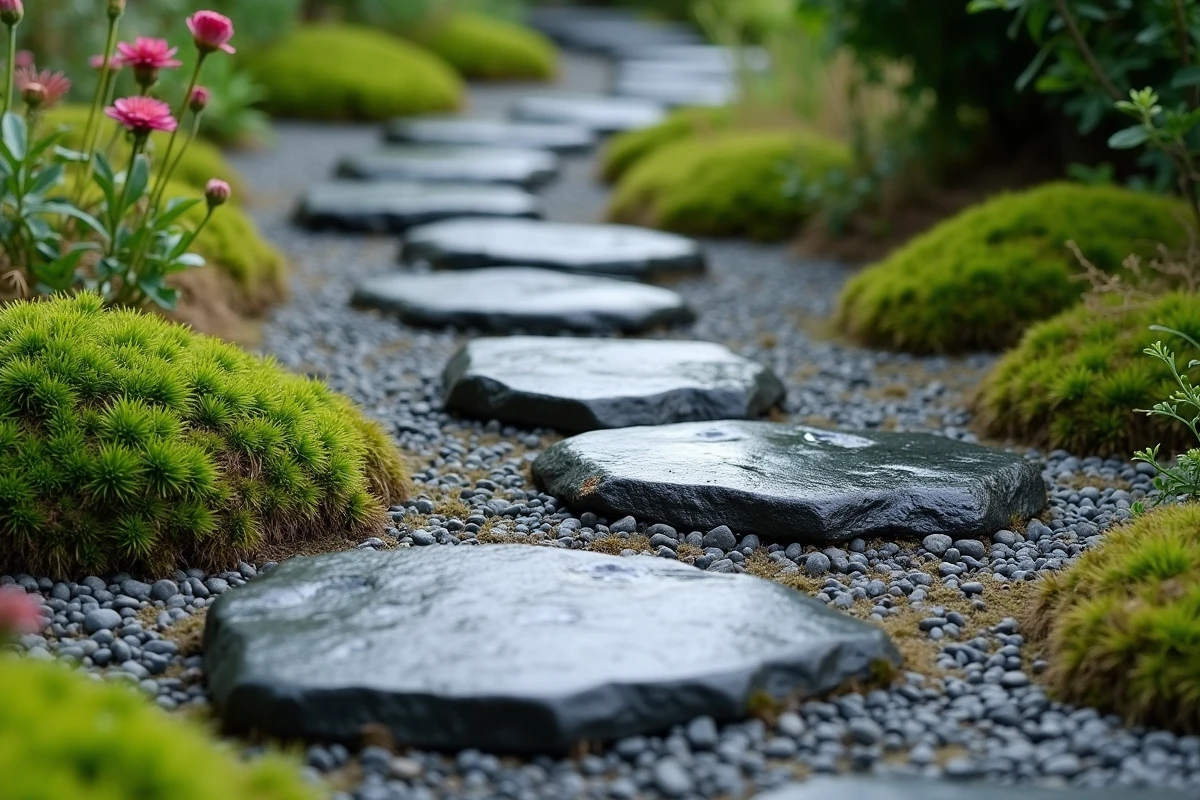
Paths prevent trampling of the lawn and provide a clear reading of the space. The slabs (sandstone, slate, travertine) are laid on a stabilized sand bed, spaced about 60 cm from center to center to match a natural stride.
Between the slabs, a ground cover like creeping thyme, pearlwort, or dichondra withstands moderate foot traffic and scents the path. This type of decorative path structures the garden into distinct areas without resorting to rigid borders.
10. Vegetal Fence with Lattice Wood Panels and Climbing Plants
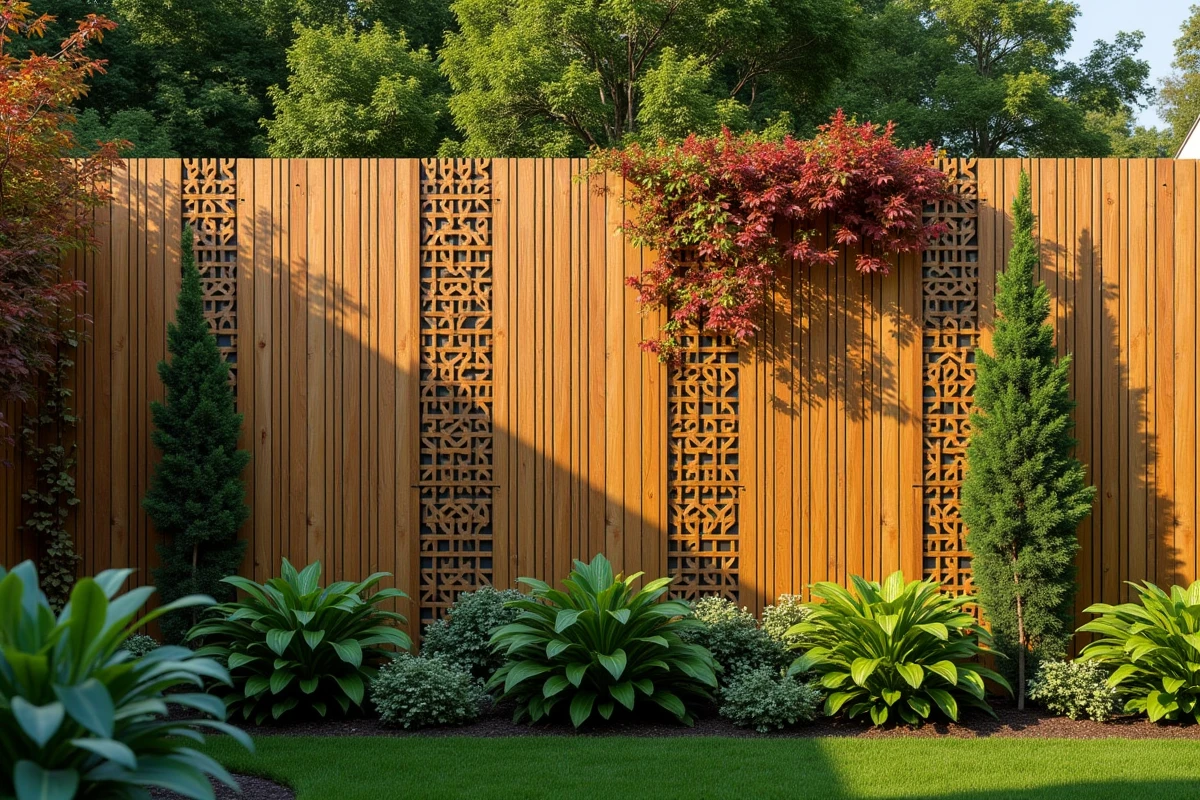
The panels with spaced horizontal slats (type wooden lattice) filter the wind instead of creating turbulence like a solid wall. Combined with honeysuckle, golden hops, or trachelospermum, they become a dense green screen in two seasons.
Secure the panels to posts set in concrete blocks, with a 5 cm gap between the ground and the first slat to prevent capillary rise. This system combines privacy, aesthetics, and durability, three key criteria for transforming a garden into a true haven of peace.
- Favor local materials (stone, regional wood) to reduce carbon footprint and ensure visual coherence with the surrounding landscape.
- Plan plantings according to soil type (clay, sandy, limestone) and not just the desired aesthetics.
- Integrate at least one water point and a dense plant shade area so that the garden remains pleasant even during summer heat peaks.
Each arrangement benefits from being thought out according to the actual uses of the family and the constraints of the terrain. A garden that functions daily, without excessive maintenance, remains the best haven of peace over time.