DIY and collaborative manufacturing are no longer limited to weekend crafting workshops. In recent years, these practices have been structured around new spaces, new tools, and new economic models that redefine the boundary between industrial production and local creation. The maker movement, long confined to 3D printing and rapid prototyping, is now engaging in practices of reuse, micro-production, and cooperation with local communities.
Circular fablabs and low-tech workshops: DIY in the service of reuse
The most notable phenomenon in recent years is the convergence between fablabs and reuse structures. Several French communities are experimenting with fablabs linked to resource recovery centers or waste disposal sites, with a specific goal: to locally transform waste streams into raw materials for collaborative manufacturing.
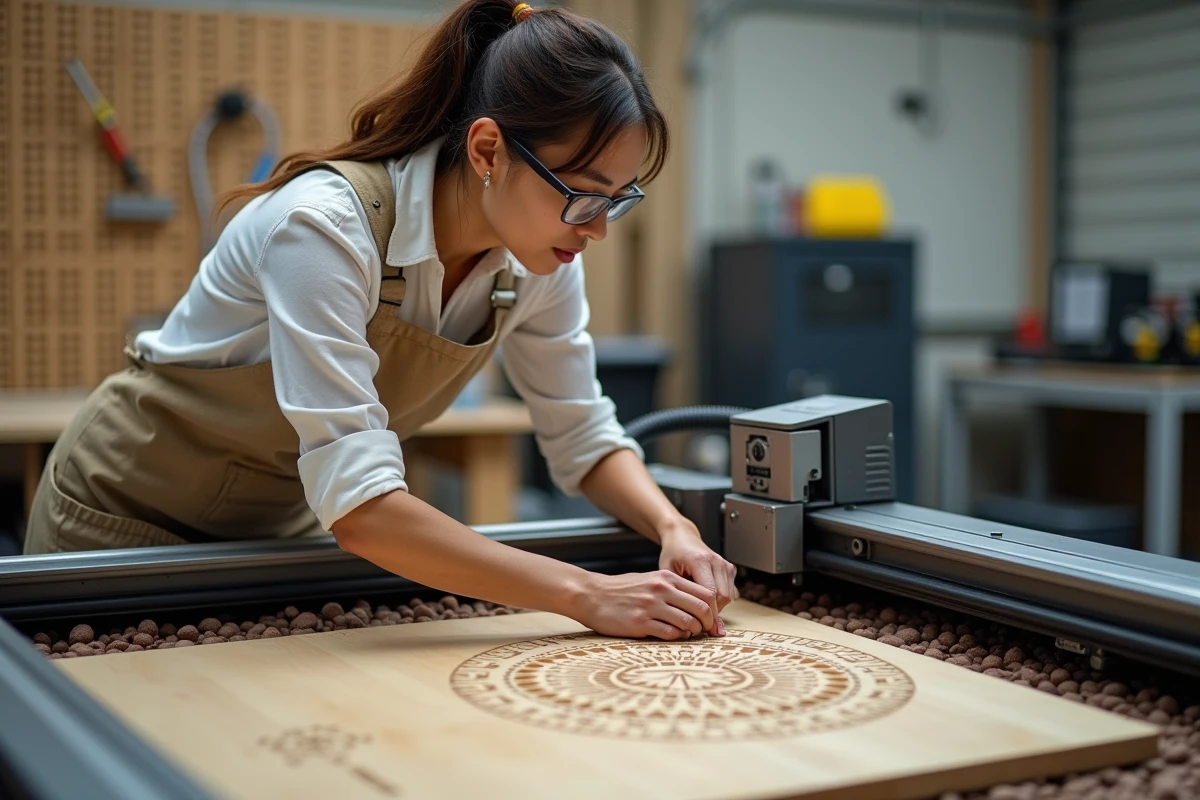
The Network of Resource Recovery and Recycling Centers has been documenting the multiplication of these partnerships since 2023. Recovered wood, electronic components extracted from end-of-life devices, and metal scraps directly feed into laser cutting, 3D printing, or shared woodworking workshops. This model fits into a logic of productive third places, where initiatives linking innovation and territorial anchoring are regularly covered on the make-world.org site.
This approach is not merely about recycling. It requires logistical organization between collection, sorting, refurbishment of materials, and their availability in an equipped workshop. Field reports vary on this point: some structures struggle to maintain a regular flow of usable materials, while others, better integrated into municipal waste circuits, operate with relative consistency.
Distributed micro-factories: from DIY prototype to local small series
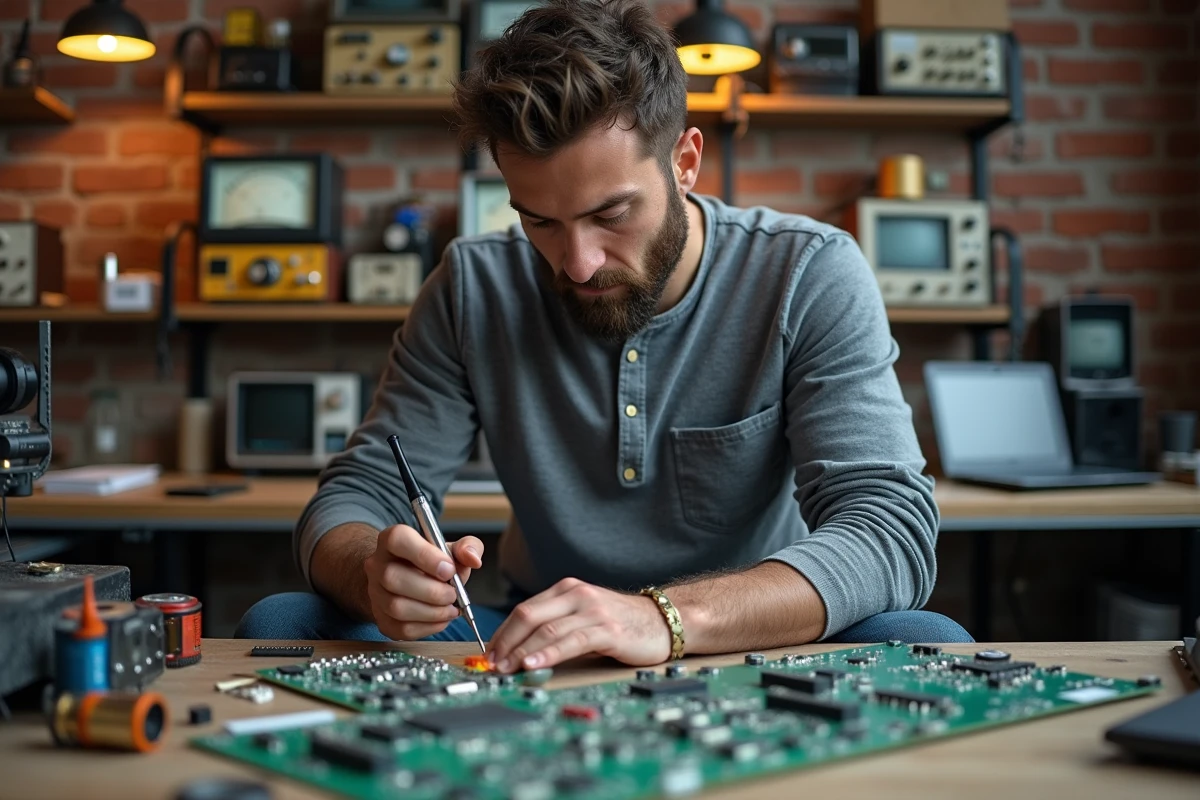
The European project CENTRINNO, funded under Horizon 2020, explored a concept that goes beyond the classic fablab: the urban micro-factory capable of producing in small series. The idea is to “gently” industrialize prototypes from collaborative manufacturing without going through traditional production circuits.
Specifically, this involves customized furniture, home equipment tailored to local demand, and spare parts that are hard to find in stores. Proximity to the end consumer reduces logistical costs and lead times.
The available data does not allow for conclusions about the long-term economic viability of these micro-factories. The CENTRINNO synthesis report (2023) describes functional local productive ecosystems, but the question of scaling up remains open. Producing ten copies of a piece of furniture in a shared workshop does not have the same direct cost structure as mass production, and the added value mainly relies on customization and reduced transportation.
What the micro-factory changes compared to the fablab
A fablab remains primarily a place for prototyping and learning. The distributed micro-factory, on the other hand, aims for commercialization. This involves new constraints:
- Quality and reproducibility requirements that prototyping does not necessitate, with controls on each batch produced
- An adapted legal framework, particularly regarding product liability and compliance with current standards
- A management of raw material flows that exceeds the usual associative functioning of makerspaces
This distinction between collaborative prototyping and structured local production constitutes the main point of tension in the development of the maker movement.
Legal frameworks and recognition of productive third places
Makers have long operated in a relative regulatory gray area. Several French regions, notably Île-de-France and Occitanie, have begun to integrate specific lines for productive third places into their economic development plans.
The question of legal status arises at several levels. A shared workshop that welcomes the public must meet obligations regarding machine safety, insurance, and liability. When this same workshop produces objects intended for sale, product compliance obligations add to the hosting constraints.
For participants, clarifying the framework is a condition for development. Without recognized status, it is difficult to access public funding, establish partnerships with communities, or sign agreements with property developers. The ongoing formalization varies from region to region, creating disparities in access to resources.
Artificial intelligence and design tools in fablabs
The integration of artificial intelligence into collaborative manufacturing tools represents a recent trend. AI-assisted design software now allows users without CAD training to generate 3D models from textual descriptions or rough sketches.
For fablabs, this lowers the technical entry barrier. A participant who does not master modeling software can still produce a file usable by a 3D printer or laser cutter. However, the quality of AI-generated files remains uneven and often requires manual refinement before machining.
The other contribution concerns material optimization. Cutting algorithms help reduce waste during the machining of panels or sheets, a direct gain in a context where circular fablabs work with recovered materials of varying dimensions.
- 3D model generation by textual description, accessible to beginners without technical drawing training
- Automatic optimization of cutting plans to limit raw material waste
- Assistance in diagnosing machine failures in workshop spaces, reducing downtime in shared environments
DIY and collaborative manufacturing find themselves at a crossroads between their original culture, based on free experimentation and knowledge sharing, and the growing demands for structuring. The fablabs that will survive are those that articulate reuse, local production, and a clear legal framework, without losing what makes them appealing: the ability for everyone to create, repair, and transform.