
All food lovers adore chocolate! And that’s great because chocolate has many benefits 😊 Let’s break it down with nutritionist Anthony Berthou.
Understanding the Composition of Chocolate
Chocolate is made from cocoa beans. In its composition, we find 3 main ingredients:
- Cocoa mass: these are the cocoa beans that have been crushed. This cocoa mass is naturally composed of 55% cocoa butter and 45% cocoa powder.
- Cocoa butter: it is obtained by cold pressing cocoa beans, which allows the separation of cocoa butter from cocoa powder.
- Sugar
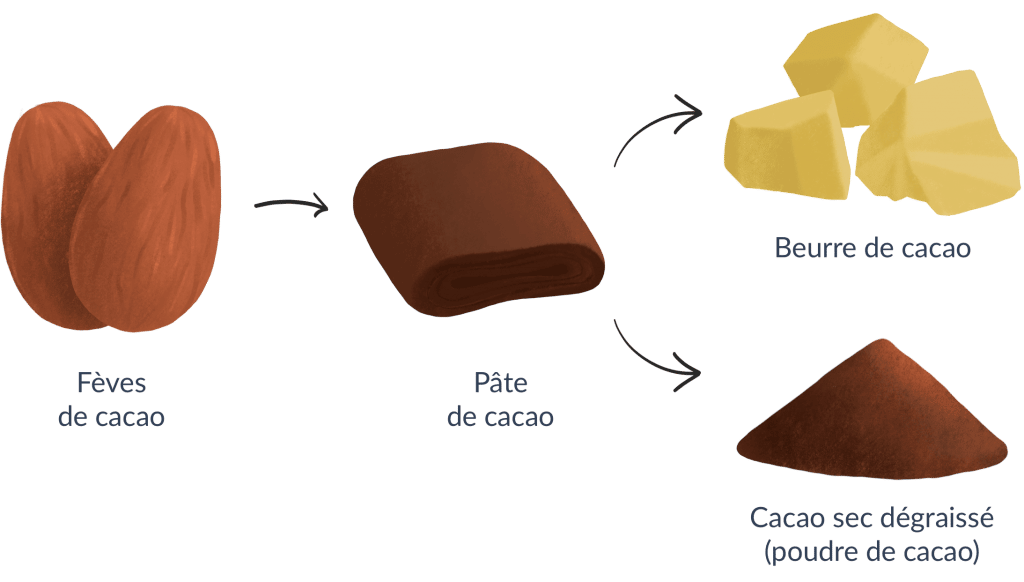
The percentage of cocoa indicated on chocolate bars corresponds to the sum of the cocoa contained in the chocolate, namely the cocoa mass (a mixture of cocoa butter and cocoa powder) and cocoa butter.
Exceptional Antioxidant Power
Cocoa has exceptional antioxidant activity and thus plays a role in the prevention of cardiovascular diseases, neurodegenerative diseases, and cancer (see our article on antioxidants).
The protective benefits are concentrated in cocoa powder, which is very rich in polyphenols, very powerful antioxidant molecules. Thus, the higher the cocoa content in chocolate, the greater its antioxidant properties! Therefore, it is in dark chocolate that we find the most antioxidants. A single square of 70% dark chocolate contains twice as many polyphenols as a glass of red wine and as much as a cup of long-infused green tea. The antioxidant content of milk chocolate is quite low, and that of white chocolate is nonexistent since it does not contain cocoa powder.
A daily consumption of 20 g of chocolate with at least 70% cocoa (or 2 small squares) thus provides a very interesting amount of antioxidants to the body and proves to be a valuable healthy food. It is ideally consumed as a snack in the afternoon.

Other Benefits of Chocolate
Chocolate is also very rich in magnesium due to its cocoa content. Dark chocolate contains almost twice as much magnesium as milk chocolate. Magnesium deficiencies are relatively common: nearly 75% of the adult population would have insufficient magnesium intake. These deficiencies can cause fatigue, sleep disturbances, and irritability.
Thanks to the presence of sugar, chocolate also optimizes the action of serotonin, a neurotransmitter that plays a key role in our mood. It thus promotes calm and well-being. Cocoa can also play a mood-regulating role due to the presence of a specific compound, theobromine.
Finally, some antioxidants present in chocolate (flavonols) may promote the growth of beneficial gut bacteria for our health and thus play a beneficial role on gut flora.
What is the Environmental Impact of Chocolate?
A favorite product for holidays, gifts, or moments of indulgence, the global demand for chocolate continues to grow. To meet this increasing demand, forests are being cleared to plant new cocoa crops. The chocolate sector is therefore the leading cause of deforestation in Côte d’Ivoire and Ghana. Furthermore, cocoa cultivation requires a lot of water resources. However, this is starting to change: many large chocolatiers and cocoa traders are moving towards “zero deforestation” commitments. Limit your consumption of chocolate, especially low-quality chocolate that is abundantly offered during the holidays. Make the most of fair trade chocolate, which imposes slightly stricter environmental criteria.
Choosing Your Chocolate Wisely
Here are some criteria to consider when choosing your chocolate:
 |
Choose dark chocolate at least 70% cocoa, as it is the cocoa powder that concentrates all the benefits of chocolate. Ideally, try to gradually move towards 90% chocolate. |
 |
Check the ingredient list. Making chocolate requires only 3 basic ingredients: cocoa mass, sugar, cocoa butter. Avoid chocolates that contain flavors or additives such as lecithin. |
 |
Choose chocolate “pure cocoa butter.” Indeed, some manufacturers use cheaper fats such as palm oil or shea butter. |
 |
Opt for organic chocolate because cocoa bean crops are not exempt from numerous pesticide treatments. |
However, chocolate remains a fatty and caloric food. Thus, limit your consumption to two or three squares of 70% dark chocolate per day: this is enough to benefit from all its advantages. Ideally, consume only raw cocoa powder, which contains very little sugar and fat. You can sprinkle it on your dishes or desserts.
Cover illustration: Aurélie Ménétrier/Illustrations Article: Tomchegaray
Tag: chocolate: good or bad